Published : 2026-08-15
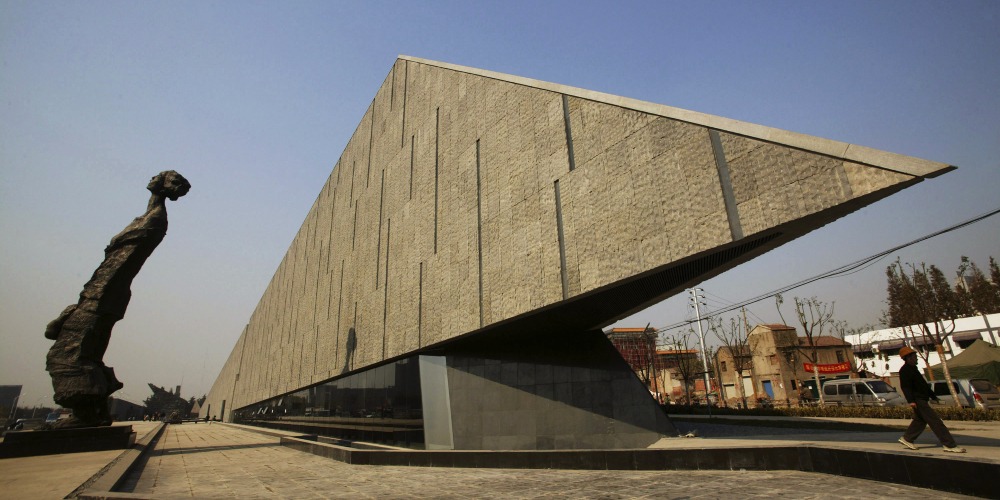
On 15 August, 1985, the Memorial Hall of the Victims in Nanjing Massacre by Japanese Invaders was built on the site of the "pit of ten thousand corpses" at Jiangdongmen (江東門), one of the massacre sites in the west of China's Nanjing.
It was opened to the public on the 40th anniversary of the victory of the Chinese People's War of Resistance Against Japanese Aggression.
The Memorial Hall of the Victims in Nanjing Massacre by Japanese Invaders was constructed to commemorate the more than 300,000 Chinese compatriots who were killed in the Nanjing Massacre by the Japanese army in 1937.
The hall's name on the front stone wall, showing the dates "1937.12.13-1938.1" in large black characters, was handwritten by Chinese leader Deng Xiaoping (鄧小平), indicating the period of the Nanjing Massacre by the Japanese army.
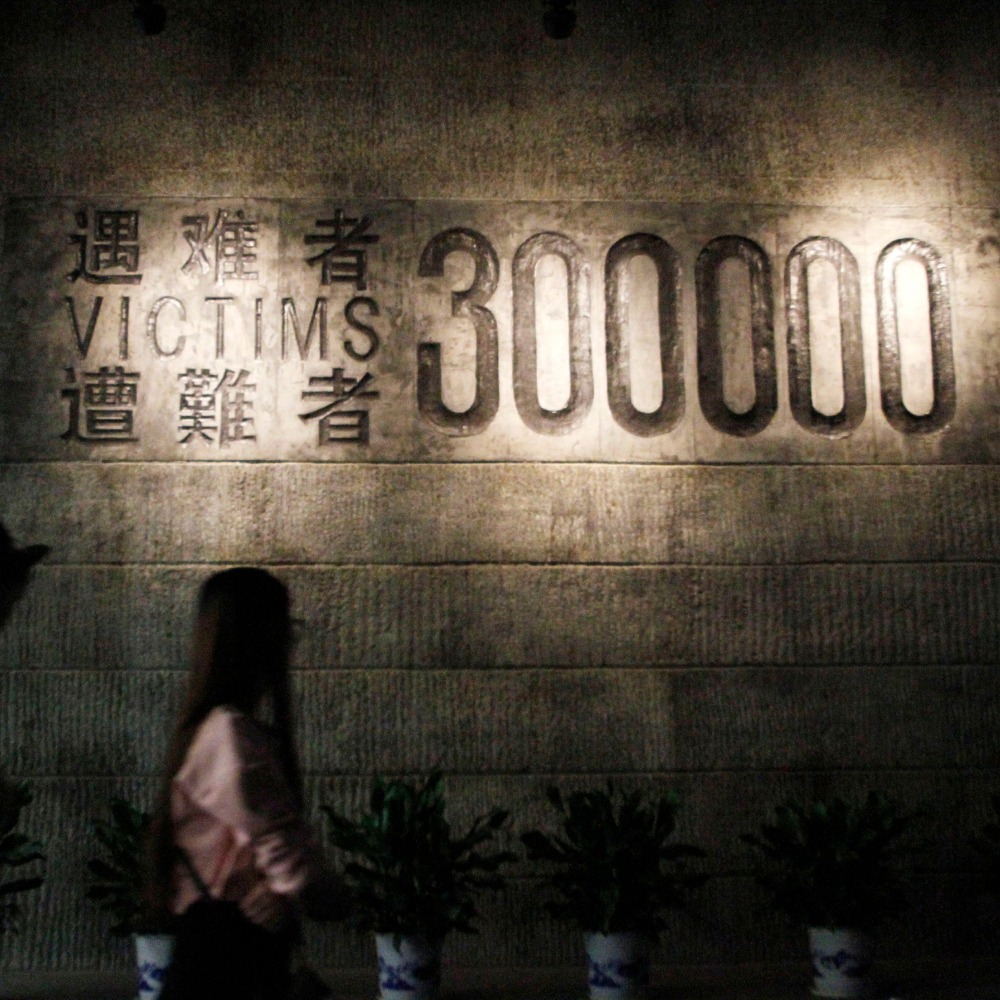
In addition, there is a set of large black characters inscribed in Chinese, English, and Japanese that reads "300000 Victims," reminding people to remember the history.
The Memorial Square features structures like Warning Bell Pavilion, Revitalisation Cauldron, and the Wild Snow poetry monument, as well as three groups of buildings: Historical Bridge, Ruined City Wall, and Broken Military Sword.
It also includes two sets of sculptures, "Head of a Victim" and "Broken Arm," along with an eternal flame and other main facilities.
Scattered throughout the courtyard are 13 stone tablets that record the historical facts of the 13 main massacre sites.
The Memorial Hall's exhibition room for the victims' remains is shaped like a coffin and displays some of the remains excavated from the site. A sculpture of a mother and the "Wall of Victims' Names," which lists 3,000 names of the deceased, stand beside it.
The large burial chamber's historical material exhibition hall displays specialised historical materials on the "atrocities of the Nanjing Massacre by Japanese Invaders," featuring over 400 historical photographs of the Nanjing Massacre, more than 60 related historical objects, and dozens of archival materials.
On 13 December, 1937, after the Japanese invaders captured Nanjing, they immediately began a six-week-long torture of captured Chinese soldiers and innocent civilians, resulting in the deaths of more than 300,000 compatriots.
This unprecedented disaster in the ancient capital of the Six Dynasties, Nanjing, is historically known as the "Nanjing Massacre."